
Most Australians who sit down at a blackjack table already know the goal is to beat the dealer without busting, but the maths behind hand values still catches plenty of casual players out. As a slot mathematician who has tuned paytables and volatility for live dealer floors, I see the same confusion on blackjack hand values explained every week: people treat 16 like a mystery instead of a probability problem. This piece walks through how hand values actually work, where the real edge sits, and what that means when you are choosing a table at a Melbourne club or comparing a local operator’s game selection.
How Blackjack Hand Values Are Built
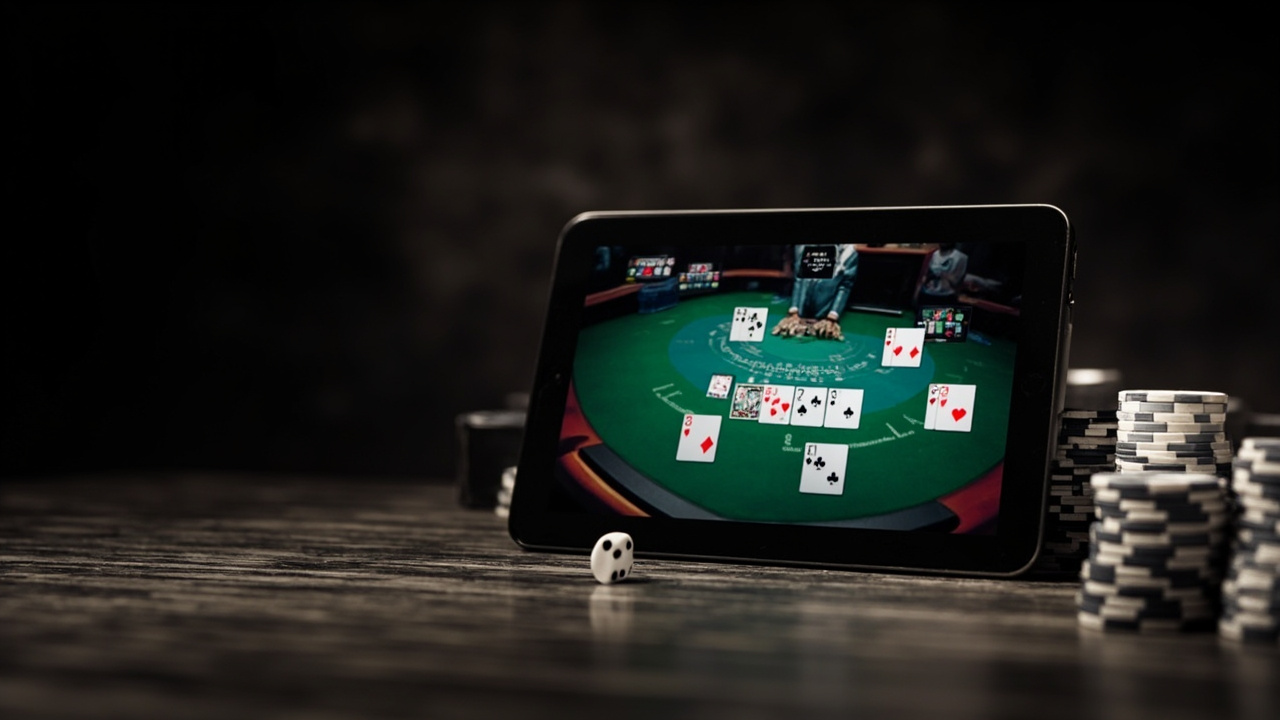
Blackjack hand values are not decorative; they are the raw inputs for every decision tree on the felt. A hand’s value is simply the sum of its cards, with face cards counting as 10 and aces flexing between 1 and 11 depending on what keeps the total under 22. The moment you understand that, the game stops feeling like guesswork and starts looking like a series of expected-value calls. I have seen operators present “blackjack hand values explained” as a beginner tutorial when it is really the foundation for bankroll management, because a player who cannot read their own total quickly will make faster, costlier mistakes at a busy table.
The two core hand types are hard and soft. A hard hand is any total without an ace, or with an ace that can only count as 1 without busting – 15, 17, 20 are all hard hands. A soft hand contains an ace counted as 11, which gives you a buffer: soft 18 can become hard 9 if you draw a 10, but it never busts on a single card. That buffer changes the correct play entirely. In my own game-design work, I model soft hands as lower-variance states because they let you take extra cards without immediate ruin, and that is exactly why basic strategy tells you to hit soft 17 far more often than a hard 17.
Reading the Table: Hard Hands, Soft Hands and Pairs
Hard Hands and the Bust Threshold
Hard hands are where most of the damage happens, because there is no ace safety net. Once you are sitting on a hard 12 through 16, you are balancing the risk of busting against the risk of standing and letting the dealer improve. The dealer’s upcard is the second input that matters here. Against a dealer 6, a hard 12 is often a stand because the dealer is likely to bust; against a dealer 7 or higher, that same 12 becomes a hit because the dealer’s expected final total is stronger. I tell players to think of hard 16 as the clearest example of this tension – it is a losing hand against most dealer cards, but the mathematically correct move still depends on whether the dealer shows a 6 or a 10. The point of blackjack hand values explained is not to make those calls feel comfortable; it is to make them consistent.
Soft Hands and Pair Splits
Soft hands change the calculus because drawing a high card often converts you to a strong hard total rather than busting you. Soft 18, soft 19 and soft 20 are typically stand-or-double situations, while soft 17 and below usually call for a hit or a double depending on the dealer card. Pair splits sit in their own category: you are not evaluating one hand value anymore, you are evaluating two independent starting positions against the same dealer upcard. Splitting 8s against a dealer 6 is a textbook move because two hands starting at 8 have better expected outcomes than one stuck hand at 16. The catch is that splits cost an extra bet, so the decision only pays off when the table rules and your bankroll support it.
Over a flat white at a Footscray café last arvo, two mates hashed this out while the lunch crowd queued outside.”I always split my 8s, even when the table looks busy,” one said. The other shook his head.”I reckon that’s fine if you have enough chips, but I’ve watched blokes split into a tilt because they ran out of table depth.” The first mate nodded.”True, but the maths is the maths – two fresh 8s beat one miserable 16 most of the time.” That exchange captures the real tension: the correct play and the comfortable play are not always the same thing, and bankroll discipline is what keeps the maths working.

What Hand Values Mean for Your Table Choice
Hand values matter most when you connect them to the actual rules on the felt, because a 3:2 blackjack payout and a dealer standing on soft 17 change the value of every decision you make. A table that pays 6:5 on blackjack inflates the house edge enough to turn a decent hand strategy into a slower bleed, and that is the kind of detail I check before recommending any operator to a client. When you are weighing blackjack hand values explained against a real casino’s offering, look at the payout, the dealer soft-17 rule, whether doubling and splitting are allowed after splits, and how many decks are in play. Fewer decks generally tighten the distribution of outcomes, which is why single- and double-deck games tend to suit disciplined basic-strategy players more than an eight-deck shoe.
For players comparing operators, the practical checklist is straightforward: https://spinsamuraibonus.net
- Confirm blackjack pays 3:2 rather than 6:5 before you sit down.
- Check whether the dealer stands on soft 17 or hits.
- Note the minimum and maximum table limits so your session fits your bankroll.
- Verify the number of decks, since that affects how often pairs and soft hands appear.
- Read the cashier details for currency and withdrawal timing, because a good table choice according to the company still gets messy if the payment flow is clunky.
A well-run operator makes those details easy to find, and that is where the review focus pays off. If you are comparing a Melbourne-facing site with a local club table, the hand values do not change, but the surrounding product does. Operators that present clear game rules, stable table limits and a cashier that handles AUD without hidden conversion friction make it easier to apply the same strategy consistently. The difference between a good session and a frustrating one is often less about the cards and more about whether the platform lets you play the maths without friction.
Where This Fits Your Play Style
If you are a casual player who wants a straightforward card game with a known house edge, blackjack hand values explained is useful because it gives you a repeatable framework instead of a gut feel. If you are a sharper player who already knows basic strategy, the same framework helps you pick tables and rules that preserve your edge rather than erode it. The hands themselves are fixed; the decisions around them are where your discipline shows up. That is why I always frame this as a fit question rather than a win question – the right table and the right bankroll plan determine whether the maths works for you over time.Megaways Multihand Blackjack At Goldenbet Casino
For players who want a stable, rules-transparent option with a clean AUD cashier and reasonable table limits, Spinsamuraibonus AU lays out its blackjack hand values explained content alongside its game selection, which makes it easier to match a table to your bankroll before you deposit. The same principle applies at any operator: check the rules, check the limits, then play the hand values you already understand.
The clearest verdict is that blackjack hand values explained is most valuable when it leads directly to better table selection and more consistent basic-strategy play, not when it is treated as a standalone tutorial. Players who understand hard totals, soft totals and pair splits can pick games with friendlier rules, manage their bankroll around the bust threshold, and avoid the slow edge inflation that comes from 6:5 tables and soft-17 dealer hits. If your priority is a card game with a defined house edge and a transparent ruleset, this is a solid fit; if you are chasing a big short-term payout, the hand values will not save you from the underlying maths.